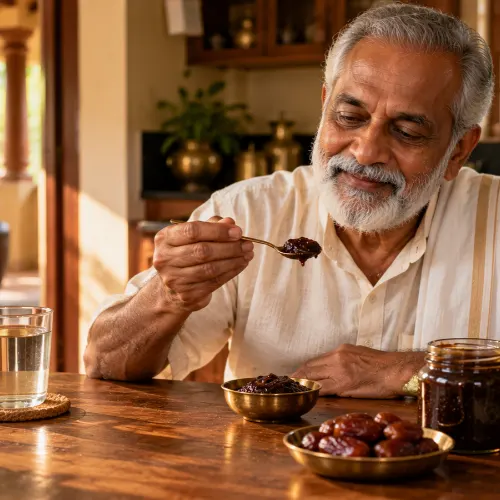
Dates for blood health sounds like a grandmother’s remedy, and in a lot of Kerala households it still is. Long before anyone talked about ferritin levels or hemoglobin panels, dried dates were pounded into ghee-based pastes and handed to anyone looking pale or worn down. Eenthapazha Rasayanam, a lehyam built around dates and meant to nourish Rakta dhatu, the tissue layer associated with blood.
Iron deficiency is common enough that most people know someone dealing with it. Fatigue, breathlessness on stairs, and a general low mood that doesn’t lift with sleep. Modern medicine treats it with supplements and dietary changes. Ayurvedic medicine approached the same problem through food-based tonics, and dates were a natural pick because they carry iron alongside natural sugars, fiber, and minerals like copper and magnesium that support how the body actually uses that iron.
Why Do Dates for Blood Show Up in Traditional Formulas?
The first thing to understand is that not all dietary iron behaves the same way. Dates contain non-heme iron, the plant-based form, which the body absorbs less efficiently than the heme iron found in meat. That’s a real limitation, and it’s worth being upfront about it rather than glossing over it. What dates bring to the table instead is a combination effect. They pair naturally with vitamin C sources in traditional recipes, and vitamin C is one of the few things proven to meaningfully boost non-heme iron absorption as per the National Institutes of Health’s iron fact sheet. Ghee, another staple in Rasayanam preparations, adds fat-soluble nutrients and makes the whole preparation easier to digest and take daily over weeks rather than days.
This is also where the Ayurvedic framing differs from a plain iron tablet. A Rasayanam is designed as a rejuvenative, taken consistently over a stretch of time, not as a quick fix. Eenthapazha Rasayanam fits that pattern. It’s built for slow, sustained use, usually alongside a diet that already includes iron-rich vegetables, jaggery, and leafy greens, rather than as a standalone solution.
What "Supporting Blood Formation" Actually Means
People often assume a remedy either cures anemia or does nothing. The reality sits in between. Hemoglobin synthesis depends on adequate iron but also on folate, vitamin B12, and overall digestive function, what Ayurveda calls agni. A date-based Rasayanam can contribute dietary iron and support digestion, but it isn’t a substitute for a blood test or a doctor’s diagnosis if someone suspects anemia. The World Health Organization notes that iron deficiency remains one of the most widespread nutritional concerns globally, and it specifically recommends confirming the cause before self-treating, since fatigue has plenty of other explanations too.
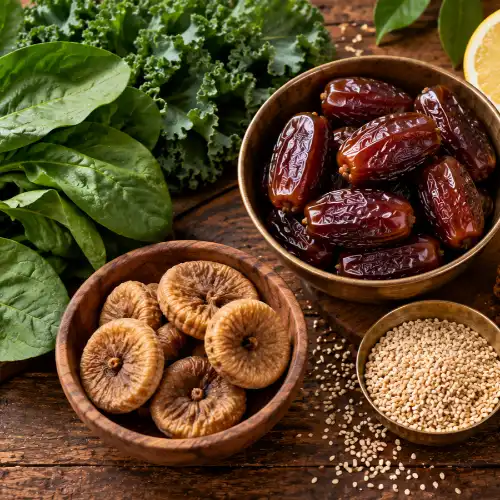
That distinction matters here because this is genuinely a health topic, not a lifestyle one. Anyone with persistent tiredness, heavy menstrual cycles, pregnancy-related fatigue, or a known history of low hemoglobin should talk to a physician first. A traditional lehyam like Eenthapazha Rasayanam can sit alongside that care as a dietary support, the way including more dates, dried figs, or sesame in a daily diet would, but it isn’t positioned to replace medical treatment for diagnosed anemia.
Who Tends to Use This Kind of Preparation
In practice, families in Kerala have used date-based Rasayanams for postpartum recovery, for children who eat poorly, and for elderly relatives who need calorie-dense, easy-to-digest nutrition. The consistency of a lehyam, thick, sweet, and spoonable, makes it more palatable than raw dates for people who struggle to eat enough throughout the day. That’s a practical reason it has stuck around for generations rather than fading out once modern supplements became available.
Final Thoughts
Dates for blood remedies aren’t a stretch. The iron content is real, the traditional pairing with vitamin C and ghee has a nutritional logic behind it, and the slow, food-based approach fits how Ayurveda generally treats deficiency. What it shouldn’t replace is an actual conversation with a doctor if fatigue, pallor, or other symptoms have been sticking around. Has anyone in your family used a dates-based tonic like this, or is it new territory?
FAQ
Short answer, no. Dates supply non-heme iron, the plant form that the gut absorbs at a much lower rate than the iron in red meat or a prescribed supplement. Pair them with a vitamin C source, skip tea right after meals since tannins block absorption, and treat dates as one piece of a bigger diet rather than the whole fix.
Raw dates give you fiber and iron on their own; there’s nothing wrong with that. A Rasayanam goes further, cooking dates down with ghee and often dry ginger or cardamom into a thick paste meant for a daily spoonful over weeks. That daily habit is really the difference, not some hidden ingredient in the mix.
Generally food-based tonics and prescribed supplements can coexist, but anyone on medication or being treated for anemia should check with their doctor first. Iron overload is a real risk if intake isn’t monitored properly.
Ghee carries fat-soluble compounds and is traditionally believed to aid absorption and digestion. It also changes the texture into something spoonable and shelf-stable, which matters for a preparation meant to be taken daily over weeks.
People with diabetes need to be cautious given the natural sugar content in dates. Anyone with a diagnosed iron overload condition, like hemochromatosis, should avoid iron-boosting foods and tonics entirely unless a doctor says otherwise.
Medically reviewed by Dr. Arun Radhesh R. (BAMS, MBA), Chief Physician, Ayur Wakeup
Visiting Consultant, Govt. Ayurveda Hospital · Last reviewed: 18 April 2026